MOTS-C
Select a filled cell to read the certificate.
MOTS-C (10mg) — Research Peptide
MOTS-C (Mitochondrial Open Reading Frame of the 12S rRNA type-C) is a 16-amino acid peptide encoded within the mitochondrial 12S rRNA gene — making it part of a class of mitochondria-derived peptides (MDPs) that have emerged as a significant research focus in the past decade. First characterised by Lee et al. in 2015 (Cell Metabolism), MOTS-C has been described as a mitochondrial hormone-like signalling peptide with roles in metabolic regulation, insulin sensitivity, and cellular stress response.
Mechanism and Metabolic Research
MOTS-C’s primary documented mechanism involves activation of AMPK (AMP-activated protein kinase), a cellular energy sensor that regulates glucose uptake, fatty acid oxidation, and mitochondrial biogenesis. AMPK activation by MOTS-C has been shown in mouse models to improve insulin sensitivity and reduce age-related metabolic decline.
The original Lee et al. study demonstrated that MOTS-C administration to mice fed a high-fat diet prevented obesity and insulin resistance, with effects mediated through skeletal muscle AMPK activation. Subsequent research has investigated MOTS-C in the context of exercise adaptation, where circulating MOTS-C levels increase with physical activity, suggesting a role as an exercise-induced mitokine.
Research Significance
As a mitochondrially encoded peptide, MOTS-C represents a new class of regulatory molecules with distinct biology from nuclear-encoded proteins. Its discovery opened investigation into the broader mitochondrial peptidome as a source of metabolic regulators — an active area of research in ageing biology, metabolic disease, and exercise physiology.
Product Specifications
- Peptide: MOTS-C (Mitochondria-derived peptide)
- Dose: 10mg per vial
- Format: Lyophilised powder, bulk box of 10 vials
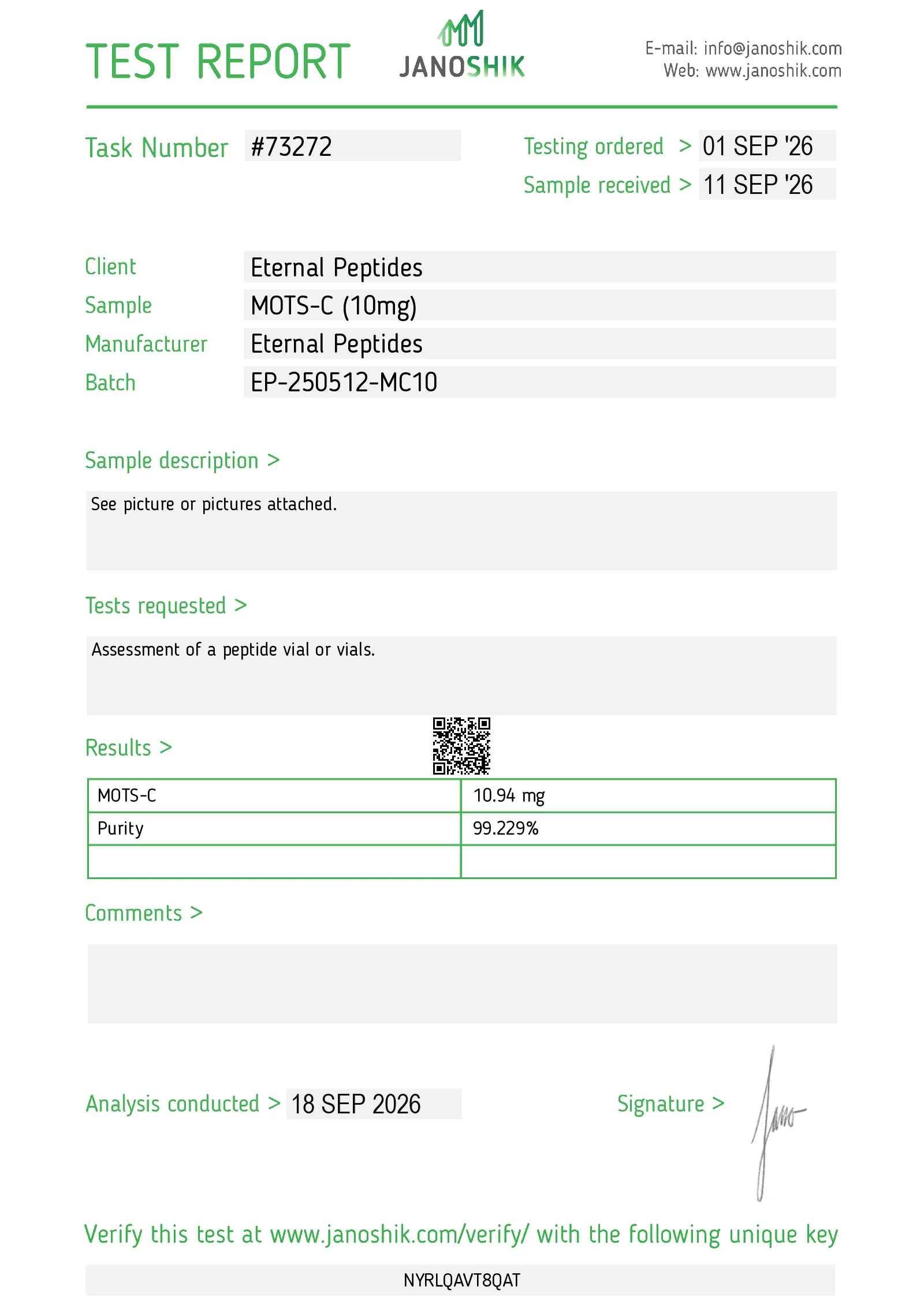
- Purity: ≥98% Janoshik HPLC verified
- Storage: -20°C. 24-month stability.
For laboratory research use only. Not for human therapeutic use.