Melanotan II
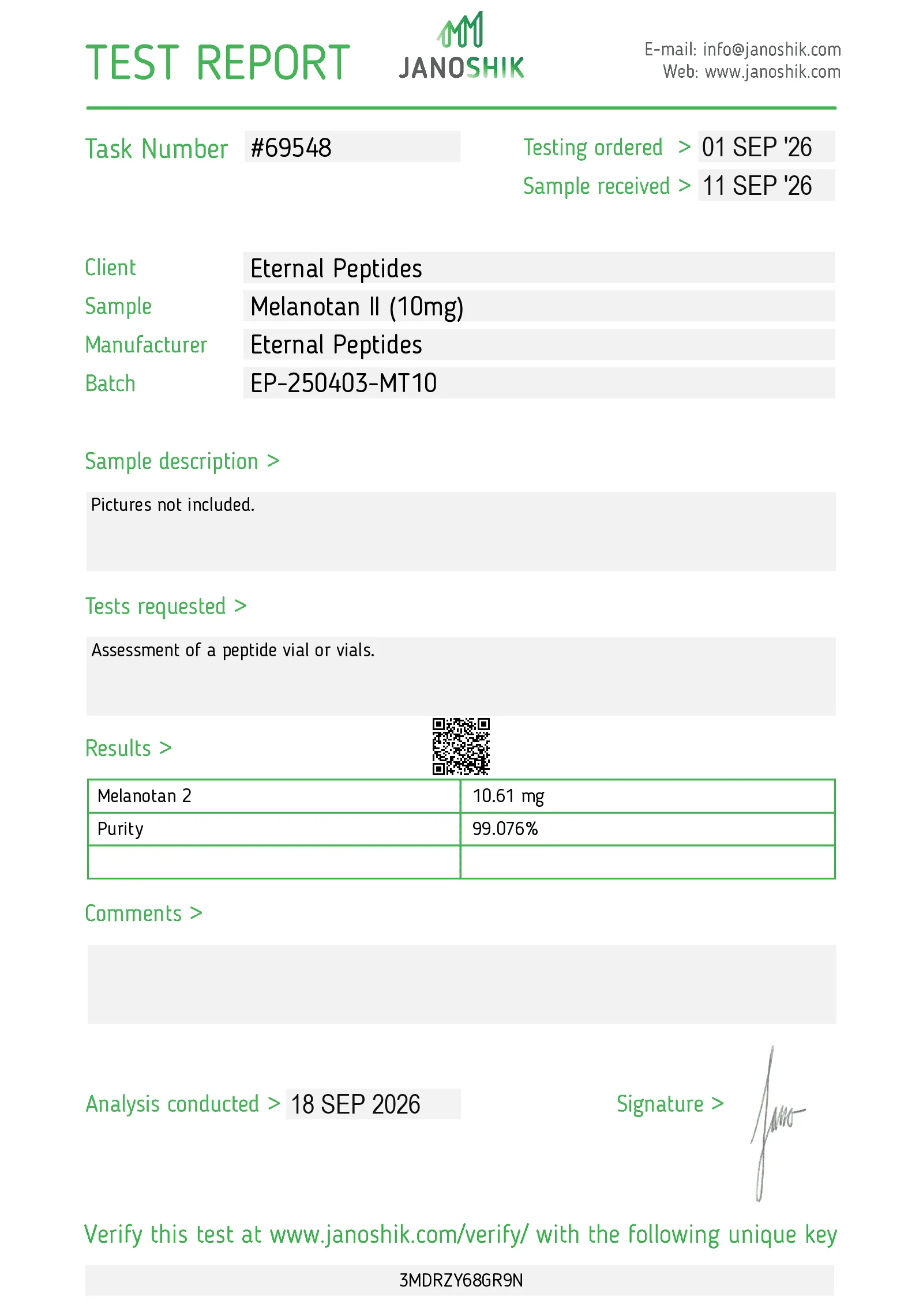
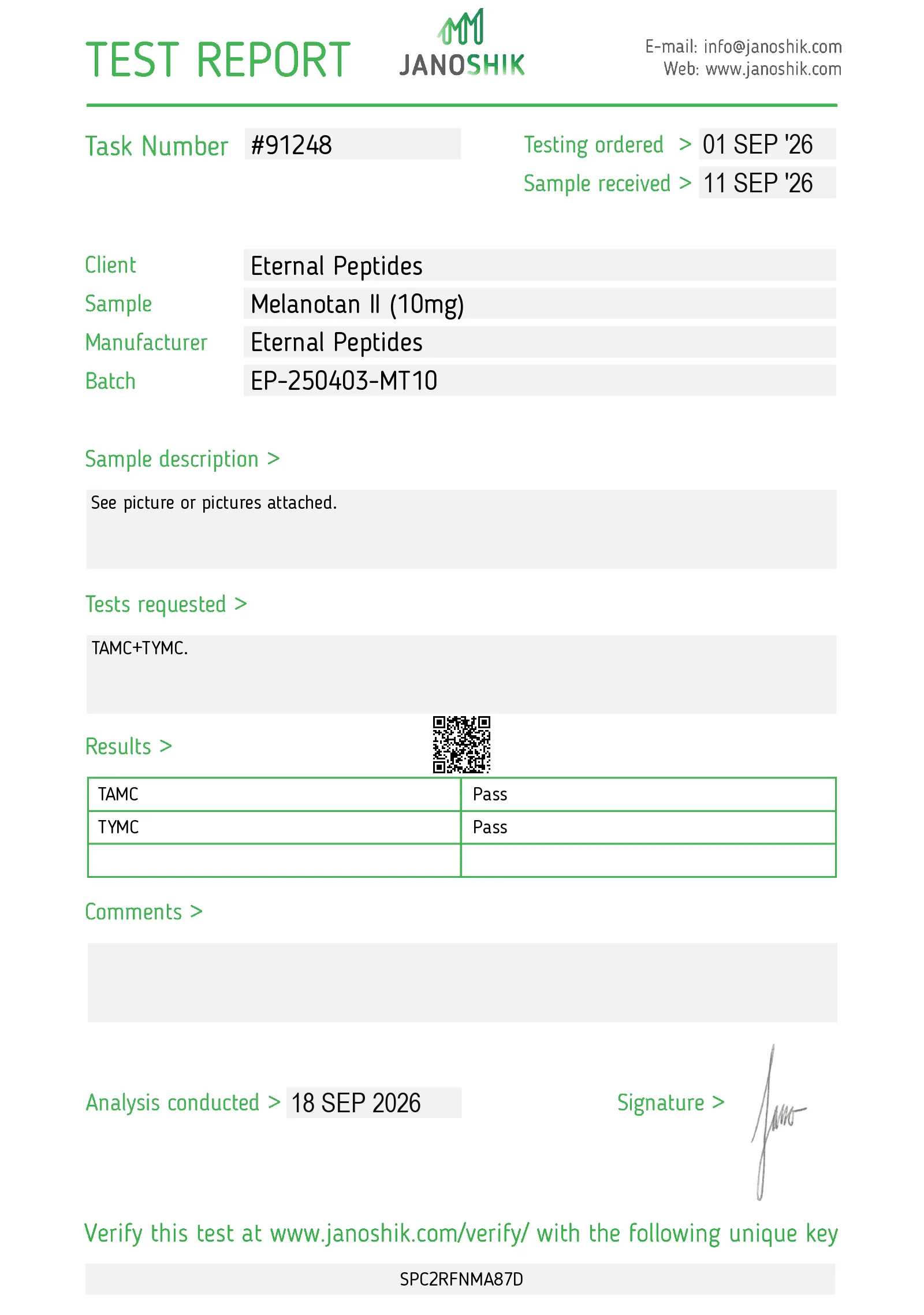
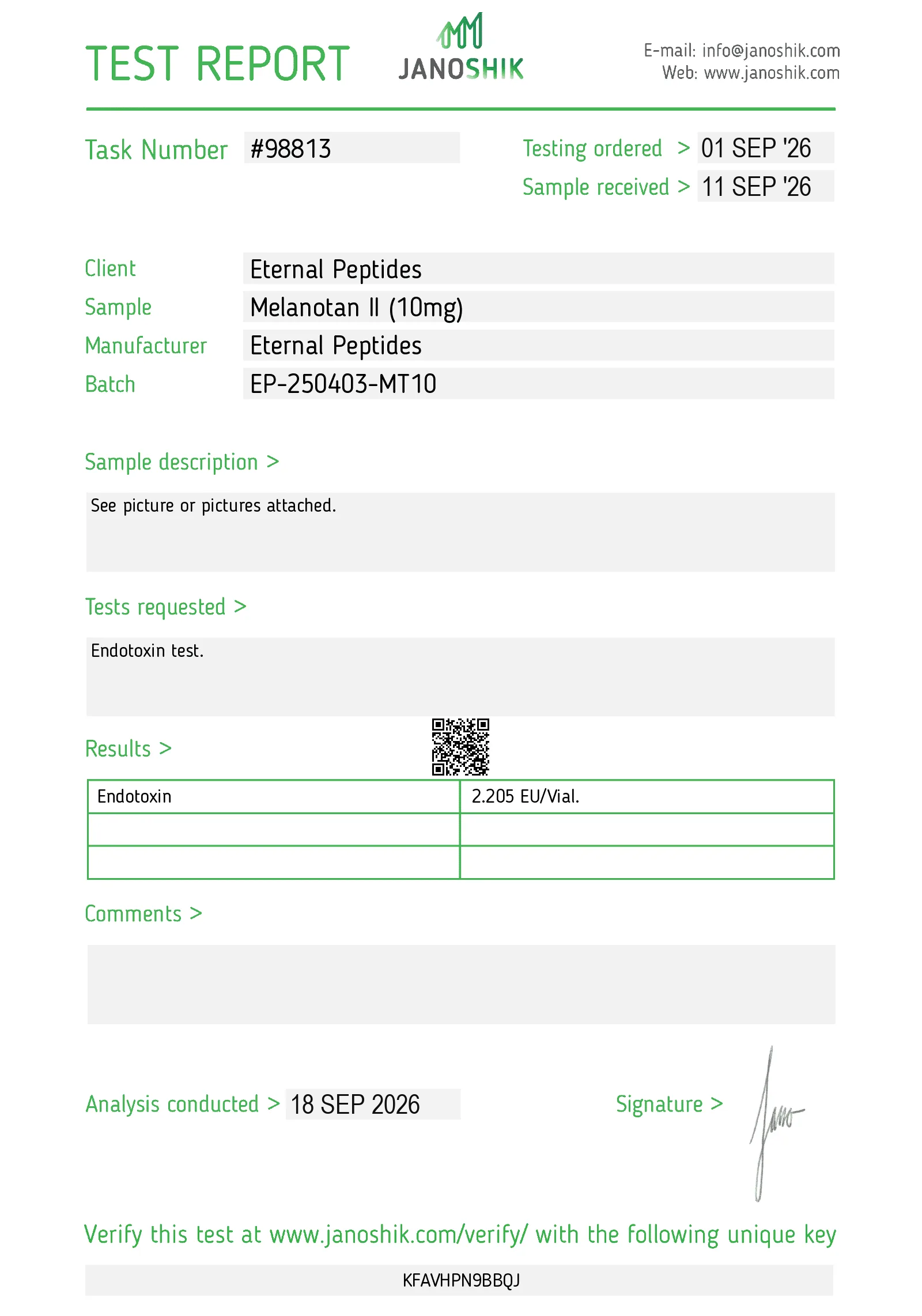
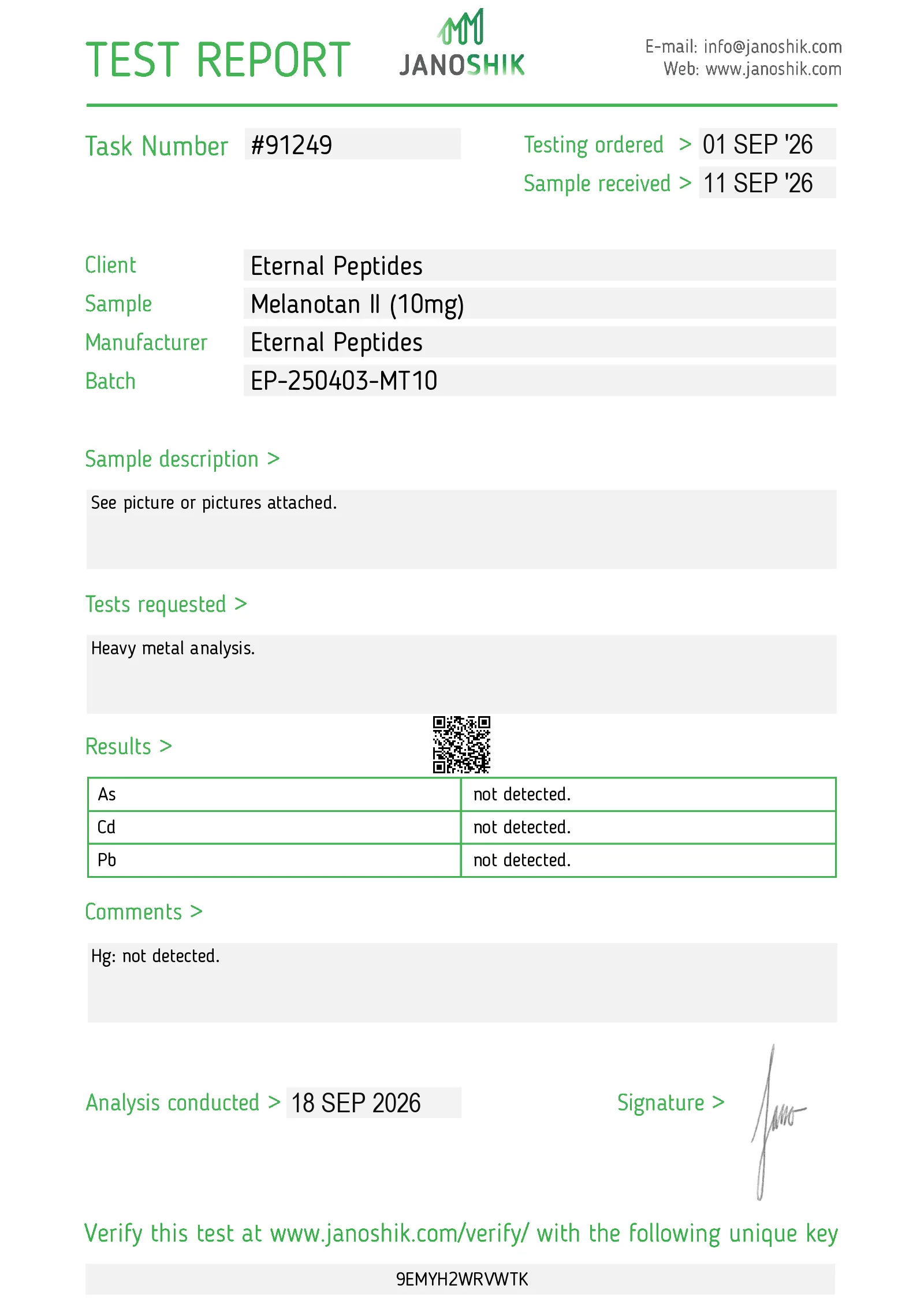
Select a filled cell to read the certificate.
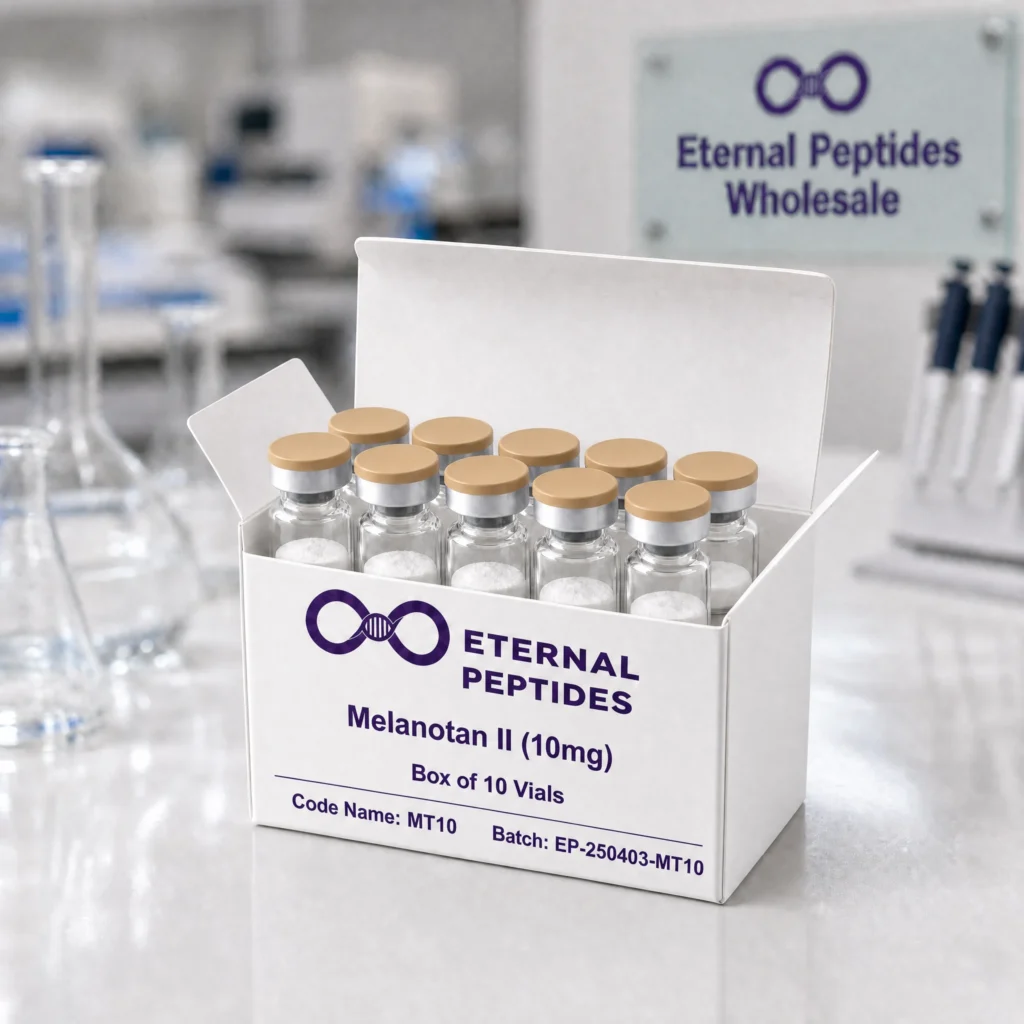
Melanotan II (10mg) — Research Peptide
Melanotan II (MT-II) is a synthetic cyclic heptapeptide analogue of alpha-melanocyte stimulating hormone (α-MSH), developed at the University of Arizona in the 1980s as part of a programme investigating melanocortin receptor agonists for their potential role in pigmentation, sexual function, and energy homeostasis research. MT-II is a non-selective melanocortin receptor agonist with activity at MC1R, MC3R, MC4R, and MC5R.
Melanocortin Receptor Pharmacology
MC1R agonism: Expressed in melanocytes, MC1R activation stimulates eumelanin (brown/black pigment) production via cAMP-PKA-MITF pathway — the mechanism studied in pigmentation biology and the basis for early tanning research interest. MC1R also plays roles in anti-inflammatory signalling in immune cells.
MC4R agonism: MC4R is expressed in the hypothalamus and plays a critical role in energy homeostasis, appetite regulation, and autonomic control of sexual function. MC4R activation is responsible for MT-II’s documented effects in preclinical sexual function research and its reported anorectic activity in rodent models.
MC3R agonism: MC3R is expressed in hypothalamic circuits regulating energy homeostasis and in the periphery. Its contribution to MT-II’s biological profile continues to be investigated.
Product Specifications
- Peptide: Melanotan II (cyclic α-MSH analogue)
- Dose: 10mg per vial
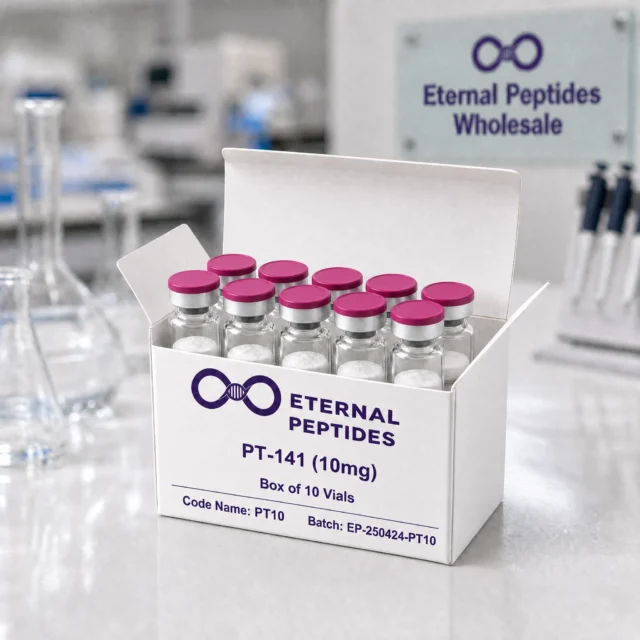
- Format: Lyophilised powder, bulk box of 10 vials
- Purity: ≥98% Janoshik HPLC verified
- Storage: -20°C. 24-month stability.
For laboratory research use only. Not for human therapeutic use. TGA scheduling applies in Australia.